
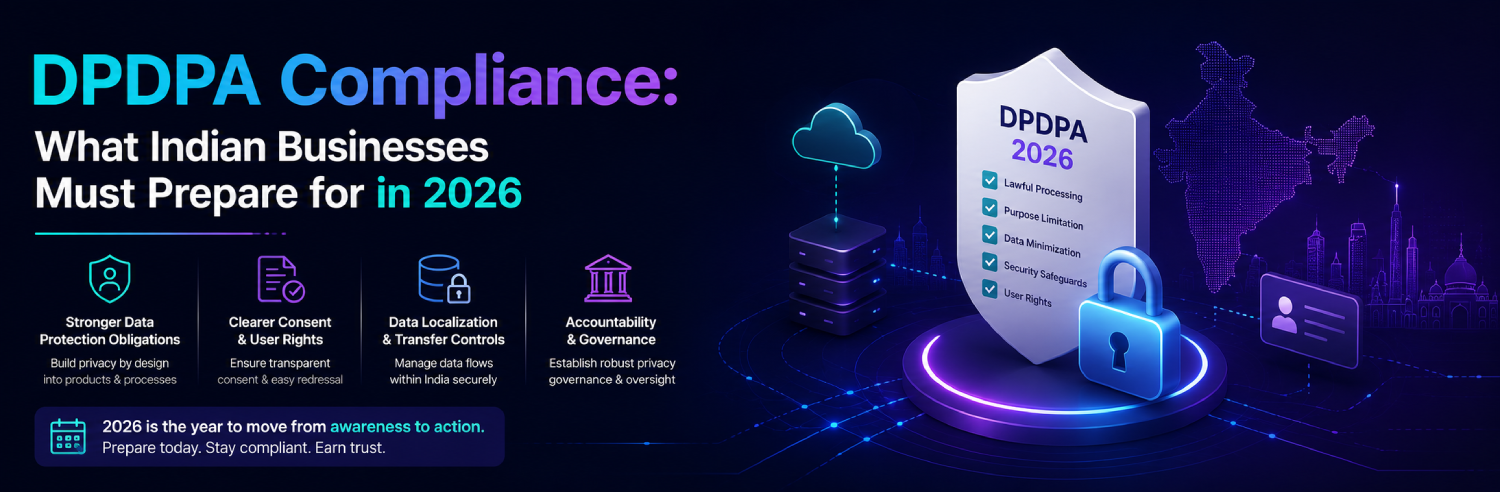
DPDPA Compliance: What Indian Businesses Must Prepare for in 2026
India’s data protection era has truly begun. After the Digital Personal Data Protection (DPDP) Act was passed in 2023, the Ministry of Electronics and Information Technology notified the DPDP Rules in November 2025, setting concrete timelines and obligations into motion. For Indian businesses, 2026 is the year to move from awareness to action — because the clock to full compliance is now running.
The Act applies to virtually any organisation that processes the digital personal data of individuals in India, regardless of size or sector. Whether you run a fintech app, a hospital, a manufacturing firm, or a SaaS company, understanding your role as a data fiduciary and preparing your systems, contracts, and processes is no longer optional. This guide breaks down what to prioritise in 2026.
Where the DPDP Timeline Stands in 2026
With the DPDP Rules notified in November 2025, implementation is phased. Administrative provisions and the Data Protection Board took effect first. Provisions relating to consent managers follow roughly twelve months after notification, while the bulk of substantive obligations — notice and consent standards, security safeguards, breach notification, data retention limits, and data principal rights — become enforceable around the eighteen-month mark in 2027.
That phasing is not a reason to wait. Building lawful consent flows, data inventories, and vendor contracts takes months of cross-functional work. Organisations that begin in 2026 will be ready and confident; those that wait risk a compressed, expensive scramble — and exposure to penalties that can reach significant amounts per violation.
Know Your Role: Data Fiduciary vs Data Processor
Under the DPDP Act, the entity that determines the purpose and means of processing personal data is the data fiduciary and carries primary accountability. Vendors that process data on your behalf are data processors. Importantly, engaging a processor does not transfer your responsibility — you must bind processors through contracts and ensure they apply adequate safeguards.
Some organisations may be classified as Significant Data Fiduciaries based on volume and sensitivity of data, triggering additional duties such as appointing a Data Protection Officer, conducting Data Protection Impact Assessments, and independent audits. Determining your classification early shapes the entire compliance roadmap.
Core Obligations to Build Toward
The DPDP framework is built around consent, purpose limitation, and accountability. In practice, that translates into a defined set of capabilities every business will need to demonstrate:
1. Clear notice and consent — plain-language notices and granular, withdrawable consent for each processing purpose.
2. Purpose and storage limitation — collect only what you need and delete data when the purpose is served.
3. Data principal rights — processes to handle access, correction, erasure, and grievance requests within defined timelines.
4. Security safeguards — reasonable technical and organisational measures to prevent breaches.
5. Breach notification — the ability to detect and report personal data breaches to the Board and affected individuals.
6. Children’s data — verifiable parental consent and restrictions on tracking minors.
Practical Steps to Take in 2026
Start with a data discovery and mapping exercise: identify what personal data you collect, where it lives, who can access it, and which third parties receive it. This data inventory is the foundation for almost every other obligation. Next, review and remediate consent mechanisms, privacy notices, retention schedules, and data processing agreements with vendors.
In parallel, strengthen security controls, establish an incident response and breach-notification process, and define how you will service data principal rights operationally. Where required, appoint a DPO and stand up a governance structure so privacy is owned, not orphaned. A formal gap assessment against the Act is the fastest way to prioritise this work.
Why Early Preparation Pays Off
Beyond avoiding penalties, DPDP readiness builds customer trust and unlocks business. Enterprise buyers, especially in regulated sectors, increasingly require privacy assurances from partners. Organisations that can evidence robust data governance will close deals faster and differentiate themselves. Treating DPDP as a trust-building exercise rather than a compliance burden turns regulation into reputation.
Conclusion
The DPDP regime marks a decisive shift in how Indian organisations must handle personal data. With the Rules now notified and enforcement phasing in through 2027, 2026 is the year to build the data inventories, consent flows, and governance that compliance requires.
Organisations that prepare early will avoid a costly last-minute scramble and gain a trust advantage with customers and partners. Treating DPDP as an opportunity to build genuine data governance, rather than a box to tick, turns regulation into reputation.
Frequently Asked Questions
When does the DPDP Act become enforceable?
The DPDP Rules were notified in November 2025, with obligations phasing in over the following months. Administrative provisions took effect first, consent-manager provisions follow around the twelve-month mark, and the bulk of substantive obligations become enforceable around eighteen months later in 2027. Businesses should prepare well ahead of these dates.
Who needs to comply with the DPDP Act?
The Act applies to virtually any organisation that processes the digital personal data of individuals in India, regardless of size or sector. If you collect, store, or use personal data of people in India, you have obligations as a data fiduciary, and engaging vendors as processors does not transfer that accountability.
What is a Significant Data Fiduciary?
A Significant Data Fiduciary is an entity classified based on the volume and sensitivity of data it processes and the risk involved. Such entities face additional duties, including appointing a Data Protection Officer, conducting Data Protection Impact Assessments, and undergoing independent audits. Determining your classification early shapes your compliance roadmap.
How Shieldbyte Infosec Can Help
Shieldbyte Infosec guides Indian businesses through the full DPDP journey — data discovery and mapping, gap assessment against the Act and Rules, consent and notice redesign, vendor contract remediation, and breach-response readiness. We help you determine whether you qualify as a Significant Data Fiduciary and build the governance to match.
Our specialists also provide Data Protection Officer (DPO) services and privacy training so your obligations are owned by qualified professionals, not left to chance. With experience spanning BFSI, healthcare, and technology, we translate the law into a practical, prioritised roadmap.