
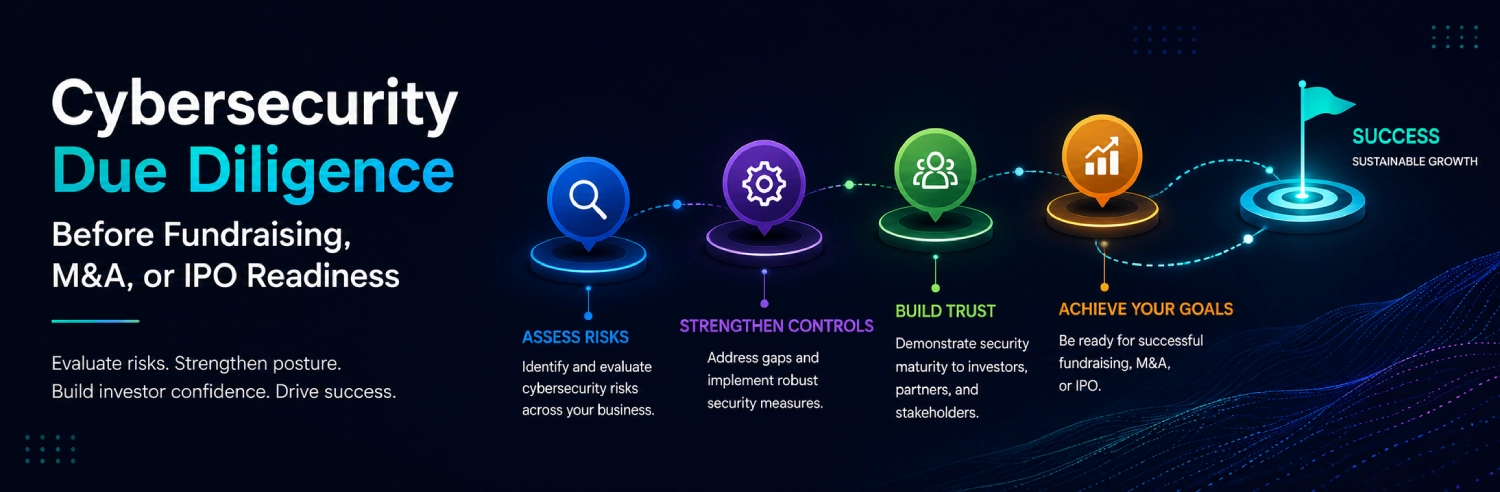
Cybersecurity Due Diligence Before Fundraising, M&A, or IPO Readiness
When an organisation raises capital, gets acquired, or prepares to go public, its cybersecurity posture comes under intense scrutiny. Investors, acquirers, and underwriters now treat cyber risk as material to valuation and deal certainty. A hidden breach, weak controls, or unresolved compliance gaps can reduce a valuation, delay a transaction, or sink a deal entirely.
Conversely, organisations that can demonstrate strong, well-documented security command more confidence and smoother diligence. Cybersecurity due diligence is no longer a back-office checkbox in deals — it is a value driver, and preparing for it in advance protects both the transaction and the price. This article explains what gets examined and how to be ready.
Why Cyber Risk Now Shapes Deals
Acquirers and investors have learned the hard way that cyber risk can be a deal-defining liability. An undisclosed breach discovered after closing can wipe out value, trigger regulatory penalties, and damage reputation. As a result, cyber due diligence has become a standard, rigorous part of the transaction process across fundraising, M&A, and IPOs.
The stakes are highest in deals involving sensitive data or regulated sectors, but no transaction is immune. A weak security posture signals operational risk and potential hidden costs, both of which directly affect how a buyer or investor values the business.
What Investors and Acquirers Examine
Diligence teams probe well beyond a high-level policy review. They want evidence that security is real, effective, and well governed. Common areas of scrutiny include:
1. Security posture — controls, architecture, and results of testing such as VAPT.
2. Past incidents and breaches — history, handling, and any unresolved exposure.
3. Compliance status — certifications and adherence to applicable regulations.
4. Data protection — how personal and sensitive data is handled and protected.
5. Third-party risk — the security of key vendors and the supply chain.
6. Governance — leadership, policies, and accountability for security.
The Cost of Being Unprepared
Walking into diligence unprepared is expensive. Gaps discovered during the process create uncertainty that buyers price in through lower valuations, holdbacks, or stricter terms. Significant findings can stall a deal while remediation is negotiated, and serious issues — like an undisclosed breach — can cause a transaction to collapse and damage trust irreparably.
Even where a deal proceeds, last-minute scrambling to answer diligence questions consumes leadership attention at the worst possible time and signals poor operational maturity. Preparation turns this dynamic on its head.
Preparing Ahead of Time
The most effective approach is to conduct your own cybersecurity due diligence before the counterparty does. A pre-deal assessment identifies the gaps a buyer or investor would find, giving you time to remediate or at least to disclose and explain them on your own terms. This includes reviewing your posture, testing key systems, confirming compliance status, and organising documentation.
Assembling a clear, well-structured evidence package — policies, certifications, audit reports, test results, and incident history — demonstrates maturity and accelerates diligence. Organisations that can answer hard questions quickly and credibly preserve both momentum and valuation.
Security as a Value Multiplier
Strong cybersecurity does more than avoid problems in a deal; it actively enhances value. A demonstrably secure, compliant, well-governed organisation reduces perceived risk, supports a higher valuation, and gives counterparties confidence to proceed. For companies on a path to IPO especially, mature security and compliance are increasingly expected by the market and regulators.
Viewed strategically, investing in security and compliance ahead of a transaction is not a cost but an investment in deal readiness and enterprise value — one that pays back precisely when it matters most.
Conclusion
In fundraising, M&A, and IPO processes, cybersecurity posture now directly influences valuation and deal certainty. Hidden breaches, weak controls, or unresolved compliance gaps can lower a price, stall a transaction, or collapse a deal entirely.
The smart move is to conduct your own due diligence before the counterparty does, remediating or transparently disclosing gaps on your terms. Strong, well-documented security is not just a defence in a deal; it is a value multiplier that pays back precisely when it matters most.
Frequently Asked Questions
What is cybersecurity due diligence?
Cybersecurity due diligence is the assessment of an organisation's security posture, history, and compliance during a transaction such as fundraising, M&A, or an IPO. Investors and acquirers examine controls, past incidents, compliance status, data protection, third-party risk, and governance to understand cyber risk that could affect value or deal certainty.
How can companies prepare for cyber due diligence?
Conduct your own assessment before the counterparty does. Review your posture, test key systems through VAPT, confirm compliance status, and assemble a clear evidence package of policies, certifications, audit reports, and incident history. This lets you remediate or disclose gaps on your own terms and accelerates the process.
Can cybersecurity affect a company's valuation?
Yes. A demonstrably secure, compliant, well-governed organisation reduces perceived risk and supports a higher valuation, while discovered gaps lead to lower offers, holdbacks, or stricter terms. Serious issues such as an undisclosed breach can stall or collapse a deal, making security a genuine value driver.
How Shieldbyte Infosec Can Help
Shieldbyte Infosec helps companies prepare for fundraising, M&A, and IPO scrutiny through independent cybersecurity due diligence and posture assessment. We surface the gaps investors and acquirers will find, support remediation, and help you assemble a credible evidence package across security, compliance, data protection, and third-party risk.
With expertise spanning VAPT, ISO 27001, SOC 2, DPDP, and vendor risk, plus vCISO support, we help you walk into diligence with confidence — protecting your valuation and your timeline.