
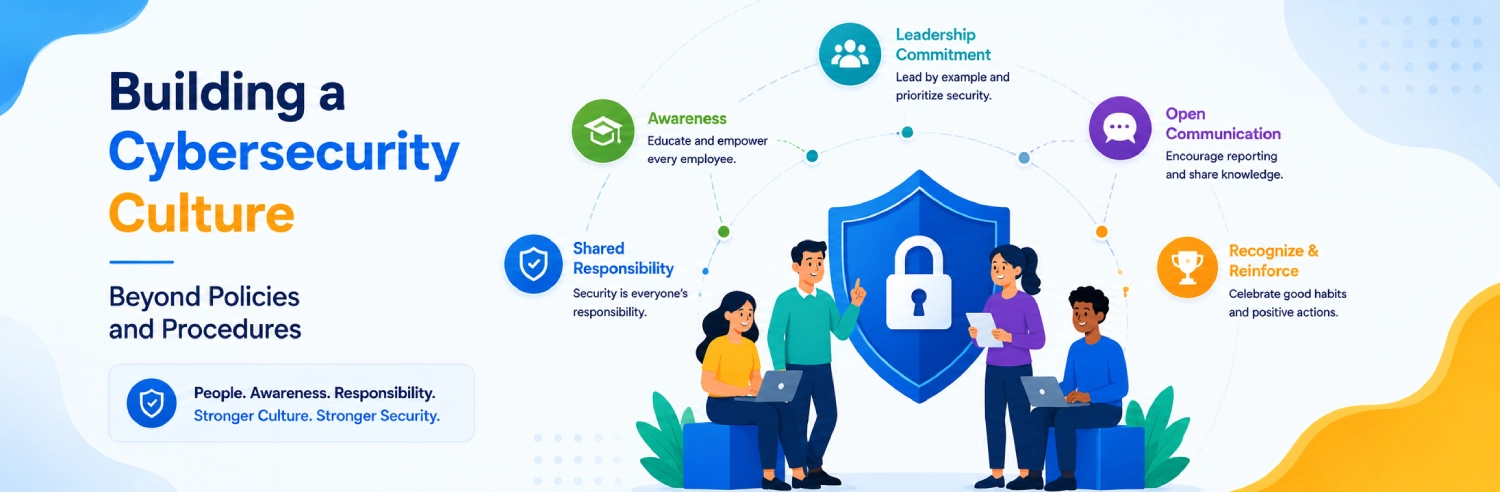
Building a Cybersecurity Culture Beyond Policies and Procedures
Most organisations have security policies. Far fewer have a security culture. The difference matters enormously, because policies describe how people should behave while culture determines how they actually behave when no one is watching. You can document the strongest controls in the world, but if employees see them as obstacles to work around, your real security posture is far weaker than your policy binder suggests.
A genuine cybersecurity culture is one where secure behaviour is instinctive, where people feel responsible for protecting the organisation, and where raising a concern is encouraged rather than punished. Building that culture is the highest-leverage security investment an organisation can make — and it goes well beyond writing policies. Here is how to do it.
Why Policies Alone Fall Short
Policies are necessary but insufficient. They tend to be written once, acknowledged during onboarding, and forgotten. When security feels like a bureaucratic hurdle, people find shortcuts — sharing passwords, bypassing approvals, using unsanctioned tools — not out of malice but to get their jobs done.
Culture fills the gap between what policy says and what people do under pressure. When secure behaviour is genuinely valued and modelled, employees make good choices even in situations the policy never anticipated. That resilience is something no document can mandate.
Leadership Sets the Tone
Culture flows from the top. When leaders visibly prioritise security — funding it, following the same rules they expect of others, and talking about it as a shared value rather than an IT cost — employees take it seriously. When leaders treat security as someone else’s problem or exempt themselves from controls, the message spreads just as fast.
Leadership commitment is not a slogan; it is demonstrated through budget, behaviour, and accountability. The organisations with the strongest security cultures are invariably those where senior management owns security personally.
Make Security Relevant and Human
Abstract rules do not change behaviour; relevance does. security awareness lands when it connects to people’s real work and even their personal lives. Effective culture-building focuses on a few human factors:
1. Relatable scenarios drawn from the threats employees actually face.
2. Continuous, bite-sized learning rather than a forgettable annual session.
3. Simulated phishing that builds instinctive caution through experience.
4. Positive reinforcement that rewards good security behaviour.
5. Personal relevance showing how the same habits protect home and family.
Create Psychological Safety to Report
One of the strongest predictors of resilience is whether employees feel safe reporting mistakes and suspicions. If people fear blame for clicking a phishing link or losing a device, they hide incidents — and hidden incidents grow into breaches. A blame-free reporting culture turns every employee into a sensor for threats.
Encouraging and even celebrating reporting, responding supportively rather than punitively, and making it easy to raise concerns all reinforce the behaviour that limits damage. The goal is fast, honest reporting, which only flourishes where people feel safe.
Sustain and Measure the Culture
Culture is not built in a campaign and then left alone; it must be sustained and measured. Track behavioural indicators — phishing report rates, time-to-report, policy adherence, incident trends — and use them to direct attention rather than to punish. Refresh messaging, vary engagement, and adapt as the organisation and threats change.
Over time, a strong culture compounds: secure habits become the norm, new joiners absorb them, and the organisation becomes resilient in a way that no purely technical investment can match. Culture is the multiplier that makes every other control more effective.
Conclusion
Policies describe how people should behave; culture determines how they actually behave when no one is watching. A genuine security culture, led from the top and reinforced through relevant, continuous engagement, fills the gap that documents cannot reach.
When secure behaviour becomes instinctive and reporting feels safe rather than risky, every employee becomes a sensor for threats. That cultural multiplier makes every other control more effective and is among the most durable security investments an organisation can make.
Frequently Asked Questions
What is a cybersecurity culture?
A cybersecurity culture is an environment where secure behaviour is instinctive, people feel responsible for protecting the organisation, and raising concerns is encouraged rather than punished. It goes beyond written policies to shape how employees actually act, especially in situations the rules never anticipated.
How do you build a security culture?
Start with visible leadership commitment, then make security relevant through relatable, continuous training and realistic phishing simulation. Reinforce good behaviour positively, create psychological safety so people report mistakes without fear, and measure behavioural indicators to direct attention. Culture is sustained over time, not built in a single campaign.
Why isn't a security policy enough?
Policies are necessary but insufficient because they are often acknowledged once and forgotten, and people find shortcuts when security feels like an obstacle. Culture bridges the gap between what policy says and what people do under pressure, enabling good choices even in unanticipated situations.
How Shieldbyte Infosec Can Help
Shieldbyte Infosec helps organisations move beyond paper policies to a living security culture. We combine expert-led, engaging training with realistic phishing simulation through ShieldPhish, and we help leadership embed security as a shared value with the right metrics and reinforcement.
By aligning culture-building with frameworks like ISO 27001 and your regulatory obligations, we help you satisfy auditors while genuinely changing how your people think and act about security.