
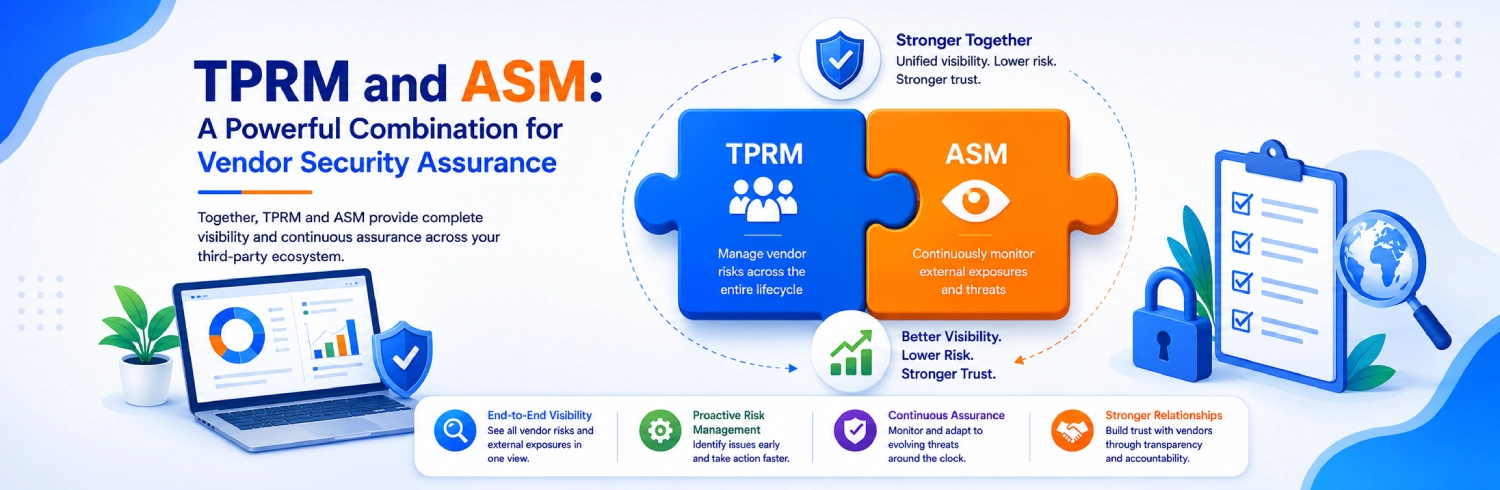
TPRM and ASM: A Powerful Combination for Vendor Security Assurance
Two disciplines have become central to managing modern cyber risk: Third-Party Risk Management (TPRM), which governs the risk your vendors and partners introduce, and Attack Surface Management (ASM), which discovers and assesses everything exposed to the internet. Most organisations treat them as separate programmes. The ones getting the strongest results are combining them.
On their own, each has a blind spot. TPRM often relies on what vendors tell you; ASM usually focuses on your own footprint. Bring them together and you get something far more powerful — externally verified, continuous assurance about both your own exposure and that of the vendors you depend on. This article explains why the combination is so effective.
The Blind Spot in Traditional TPRM
Classic third-party risk management leans heavily on questionnaires and attestations. Vendors describe their controls, and you take them largely on trust. The problem is obvious: self-reported answers reflect intentions and may be outdated, incomplete, or simply optimistic. You are assessing what a vendor says about itself, not what an attacker can actually see.
This gap means a vendor can pass your assessment with flying colours while leaving exposed systems, expired certificates, or leaked credentials visible on the internet. Traditional TPRM, by itself, cannot detect any of that.
What ASM Brings to Vendor Risk
Attack Surface Management looks at an organisation the way an attacker does — from the outside in, continuously discovering exposed assets and weaknesses. Applied to vendors, ASM provides objective, external evidence of their real security posture, independent of what they claim.
This external view surfaces signals that questionnaires never capture: internet-exposed services, misconfigurations, unpatched systems, certificate issues, and indicators of compromise. It turns vendor assessment from a trust exercise into a verification exercise.
Why the Combination Is Greater Than the Sum
TPRM provides the context and governance; ASM provides the external verification. Together they create a complete, continuously validated picture of vendor risk. The combined approach delivers benefits neither discipline achieves alone:
1. Verification of vendor claims against externally observable reality.
2. Continuous monitoring that flags vendor posture changes between assessments.
3. Prioritisation of the vendors whose real-world exposure is highest.
4. Early warning of vendor breaches or deterioration as they emerge.
5. Stronger evidence for regulators expecting ongoing oversight.
From Point-in-Time to Continuous Assurance
Perhaps the biggest gain is timing. Questionnaire-based TPRM is point-in-time; ASM is continuous. Combining them shifts vendor assurance from an annual snapshot to an always-on capability that learns about problems in days, not at the next review cycle.
This matters because vendor risk is dynamic — a partner that was secure last quarter may be exposed today. Continuous, externally verified monitoring ensures that deterioration in a critical vendor triggers an alert rather than going unnoticed until it causes harm.
Operationalising TPRM and ASM Together
The practical path is to integrate external attack surface signals directly into your vendor risk workflow: tier vendors by criticality, run structured assessments for context, and overlay continuous external monitoring so the two data sources reinforce each other. Alerts then drive action — reassessment, remediation requests, or escalation.
Modern AI-powered platforms make this achievable without armies of analysts, automatically correlating vendor information with external evidence and surfacing what matters. The result is vendor security assurance that is both rigorous and sustainable.
Conclusion
Third-party risk management and attack surface management each have a blind spot: TPRM relies on what vendors tell you, while ASM focuses on your own footprint. Combined, they deliver externally verified, continuous assurance about both your exposure and your vendors’.
This pairing shifts vendor assurance from a point-in-time trust exercise to an always-on verification capability. With AI-powered platforms making it practical at scale, the combination is fast becoming the standard for credible vendor security assurance.
Frequently Asked Questions
How do TPRM and ASM complement each other?
TPRM provides governance and context through assessments and contracts, while ASM provides objective, external evidence of a vendor's real security posture. Together they verify vendor claims against observable reality, enable continuous monitoring, and prioritise the vendors whose actual exposure is highest, creating a complete and validated picture of vendor risk.
Why aren't vendor questionnaires enough?
Questionnaires are self-reported and point-in-time, so they reflect what a vendor says about itself, which may be outdated or optimistic. A vendor can pass an assessment while leaving exposed systems or leaked credentials visible online. ASM adds the external verification that questionnaires alone cannot provide.
Can this be automated?
Yes. Modern AI-powered platforms correlate vendor information with external attack surface signals automatically, surfacing what matters without large analyst teams. This makes continuous, externally verified vendor assurance both rigorous and sustainable, integrating external monitoring directly into the vendor risk workflow.
How do you start combining TPRM and ASM?
Begin by tiering vendors by criticality and data sensitivity, run structured assessments for context, then overlay continuous external monitoring so the two data sources reinforce each other. Alerts from external signals drive action such as reassessment, remediation requests, or escalation, turning vendor assurance into an ongoing, evidence-based process.
How Shieldbyte Infosec Can Help
Shieldbyte Infosec’s ShieldRisk unites third-party risk management with continuous external monitoring, using AI to identify, assess, monitor, and report cyber and compliance risks across your vendor ecosystem. It verifies vendor claims against real-world exposure rather than relying on questionnaires alone.
Combined with our attack surface and vulnerability assessment expertise, we help you build vendor security assurance that is continuous, evidence-based, and ready to satisfy RBI, SEBI, IRDAI, and DPDP expectations.